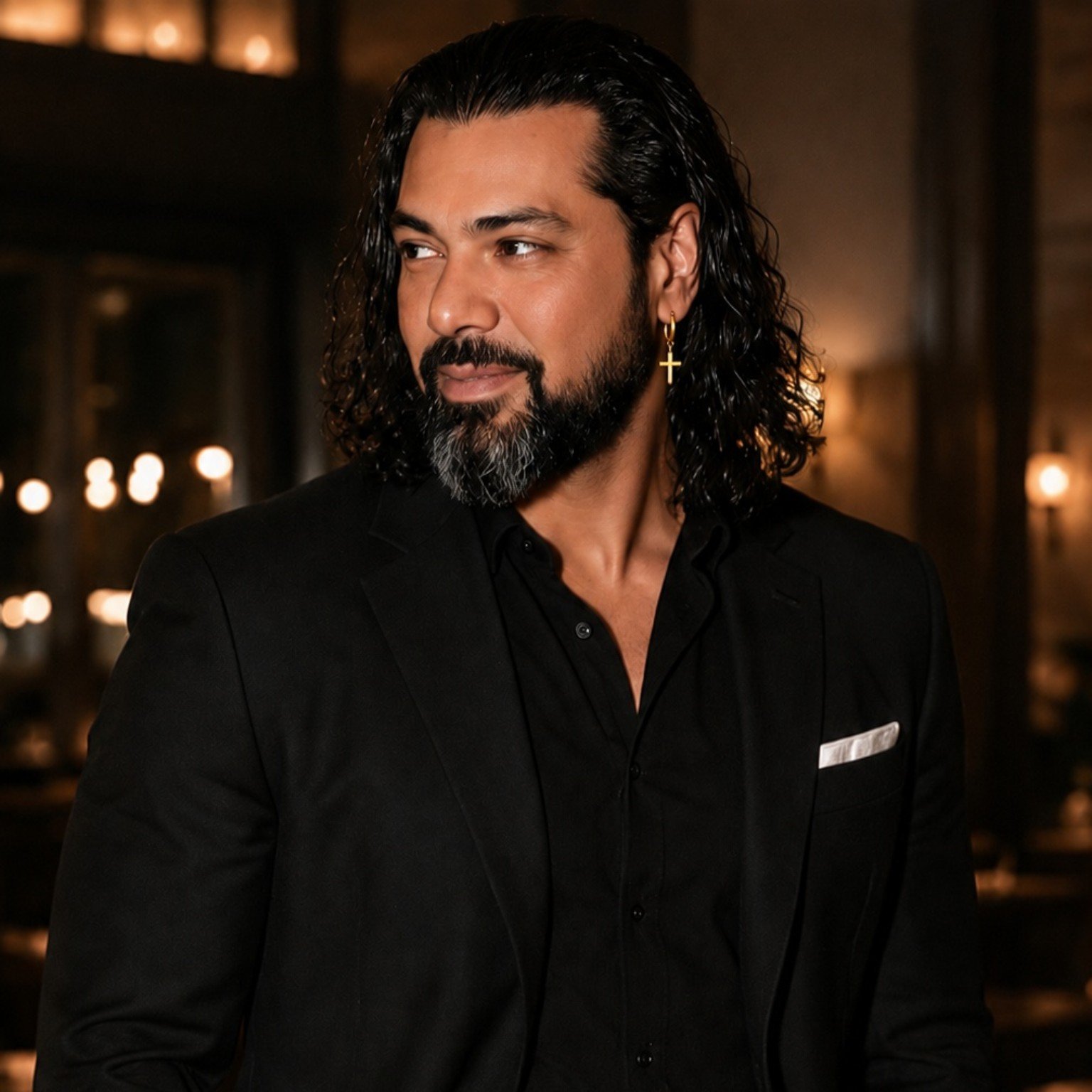
I have traded my own capital, managed other people's, run a trading floor, co-founded a brokerage and built systematic strategies.
Each of those seats teaches something the others cannot. Most of what I do in mentorship comes from having sat in all of them.
Michael Neo · Founder of Traders Temple
Smartline Investments
At Smartline Investments I managed multi-million dollar funds.
Running institutional money teaches you the difference between having a view and being allowed to act on it. You work to a mandate. You answer for drawdown. Conviction is not the constraint. Process, sizing and accountability are. Most private traders have never had to justify a position to anyone, and it shows in how they hold them.
Saxo Bank
At Saxo Bank, I helped design the Scandinavian equity trading strategy and oversaw daily trade execution, liquidity handling and risk management across the models.
That work included managing institutional infrastructure, pricing feeds, order execution and real-time market risk.
True edge requires understanding both how order flow is handled behind the scenes and how liquidity really works in the marketplace—and how to use that understanding to your advantage.
TempleFX
I co-founded TempleFX, also known as TempletonFX, the FX arm of Templeton Securities, an FCA-regulated stockbroking house.
This is the seat almost nobody teaching this subject has occupied. From inside a brokerage you see the real distribution of outcomes rather than the advertised one. You see which behaviours end accounts, and how consistently the same few do it. Not the theory of why traders fail, but the ledger.
It changed permanently how I think about risk, position sizing and the distance between what people intend to do and what they actually do.
TradeAlgo
At TradeAlgo I was Chief Market Strategist & Senior AI Portfolio Advisor, helping build AI-modelled portfolios and language-model systems for long-only US equities.
Systematic work imposes a particular discipline: a view has to survive being written down as rules. Ideas that feel obvious frequently cannot be specified at all, and when that happens the idea was usually weaker than it felt. That test is worth applying to discretionary trading too. Most people have never run it on their own methods.
Across those years the work has spanned intraday, swing and long-term positioning, cycle analysis, portfolio construction and the psychology that decides whether any of it gets executed. Different horizons demand different approaches, and most of what goes wrong is not the analysis.
More information has not made traders better.
The tools are free. The data is everywhere. Analysis arrives faster than anyone can read it. Outcomes have not improved, because none of that supplies the thing that was missing: a process you can explain, follow and review, and the discipline to hold to it when your own money is at risk.
Traders Temple is built around that gap.
Foundation School
Free, and open to anyone. There is a reason it is called Foundation School: it is where you learn the language of the markets, understand risk, and begin building a process rather than collecting opinions. Nobody should pay to learn what a spread is.
A professional course will follow.
Trader Match
Prop firms have become the loudest part of retail trading, and most of the noise is marketing. Programmes differ enormously in rules, costs and what they actually require of you, and those differences are rarely obvious from a landing page. Trader Match exists so you can compare what is really on offer before committing money to it.
Traders Temple Intelligence
Coming soon. Temple Intelligence built to support judgement rather than replace it, with context on what is moving and why, presented so you can reason about it yourself.
Private mentorship
The individual end of the same work. I look at what you are trading, where you keep getting stuck and what needs to change. Then I hold you to it.
Traders Temple is deliberately institution-first. The curriculum, frameworks and tools are governed under the Traders Temple name so they can be examined, improved and applied without anyone depending on one individual. I provide the provenance and the accountability behind the work; the methodology has to stand on its own.
Traders Temple does not sell signals and does not tell anyone what to trade. It exists to help people build a process they can understand, practise, test and take responsibility for themselves.
A temple is somewhere you go to do the work properly. That is the intention.